
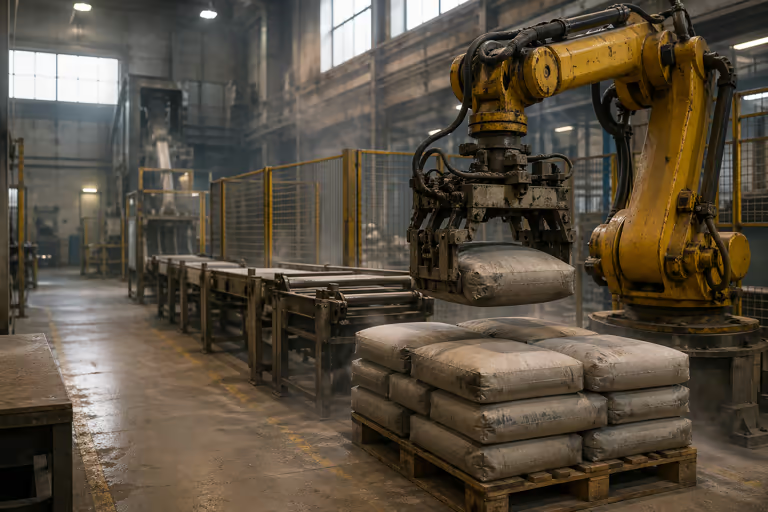
Palletising of Cement and Fertiliser Bags (up to 50 kg)
The standard robotic drop-in for heavy-duty palletising of cement and fertiliser bags — heavy-duty robot, clamp gripper, IP54+ periphery, CE / SIL 2.
Industries
- Building materials
- Agrichemicals and fertilisers
- End-of-line packaging
Tech Stack
- Heavy-duty 6-axis robot (150–300 kg payload)
- Heavy-duty clamp gripper for bags
- IP54+ peripherals (cement/fertiliser dust)
- HMI recipes per bag SKU
- CE / SIL 2 fence + light curtain
Context and challenge
A building-materials or fertiliser plant where bags up to 50 kg are palletised at the end of the line — heavy, dusty work in an environment that is aggressive to electronics.
Weight and ergonomics
50 kg bags, thousands per shift — serious back and lower-back injuries; turnover is highest on the heaviest shifts.
Abrasive and corrosive dust
Cement dust is abrasive and alkaline; fertiliser dust is corrosive due to nitrates — without reliable IP protection, electronics fail fast.
Pallet change-out without stopping
Full pallet out, empty in — the conveyor cannot stand still while the pallet zone is being serviced.
CE safety isn't optional
Fence, light curtain and interlocks are audit entry requirements — well before cycle-time math enters the conversation.
Solution
A standard cell for heavy-duty palletising — robot and gripper sized for a 50 kg bag, IP54+ peripherals, corrosion-aware tooling, and a CE / SIL 2 perimeter.
Heavy-duty 6-axis robot
Payload and reach for a 50 kg bag plus a heavy-duty clamp gripper — ABB IRB 660 / KUKA KR QUANTEC PA / FANUC M-410iB/300 class.
Heavy-duty clamp gripper for bags
A robust grip for compliant bags of coarse, dry material — vacuum-based grippers don't hold reliably with cement or fertiliser dust in play.
IP54+ peripherals and sealed servos
Cement and fertiliser dust damage encoders, cabinets and servo drives without reliable IP protection and filtered cabinet cooling.
Corrosion-resistant tooling
For fertiliser (nitrate salts) the contact surfaces are stainless steel or coated — protects gripper life and keeps the grip consistent over time.
HMI with layer recipes per SKU
Every SKU and pallet size with its own pattern — the operator picks from a list, no robot reprogramming on product change.
CE / SIL 2 fence + light curtain
Perimeter with interlocks, a pallet-change gate and a service zone — the entry-level requirement of any modern plant.
Process, step by step
How a standard heavy-duty bag-palletising cell is scoped — from line audit through commissioning under load.
Line audit
Bag type (cement / fertiliser / NPK), weight (25–50 kg), throughput, dust characteristics and the existing conveyor infrastructure.
Robot and gripper selection
Payload class and reach, IP rating of the gripper, contact-surface material (stainless where fertiliser is present) — matched to the specific bag format.
IP, corrosion and safety layout
IP54+ perimeter, corrosion-resistant materials for fertiliser lines, CE / SIL 2 fence and a service zone — tuned to the plant's specifics.
Integration and recipe setup
PLC to conveyor, label printer and scanner; HMI with recipes for every SKU; commissioning under load with an operator on shift and fine-tuning.
300–500/h
Typical bag throughput
up to 50 kg
Typical bag payload per pick
IP54+
Standard dust-ingress rating
CE / SIL 2
Standard safety rating
Related Case Studies
Heavy-Bag Palletising (Flour, up to 25 kg)
The standard robotic drop-in for heavy-bag palletising — 6-axis heavy-duty robot, clamp gripper, dust-ready periphery, per-SKU recipes.
Read Case StudyRobotic Loading of Rubber Blanks into a Vulcanising Press
A COMAU robot with a Gimatic gripper feeds rubber blanks from multi-level racks into a vulcanising press — millimetre-precise, hands-free.
Read Case Study“Palletising cement and fertiliser is work for machines, not people — the dust, weight and corrosion wear out ergonomics and drain operator retention.”

Have a similar application in mind?
Send us your requirements and we'll outline a concept proposal.